


Revenue Unicorn Club: Figma
Figma Joins Revenue Unicorn Club
Congratulations to Figma as it crosses $1 Billion in annual revenue and joins the software Revenue Unicorns!
Let's see what we can learn from Figma's journey...
Revenue Growth
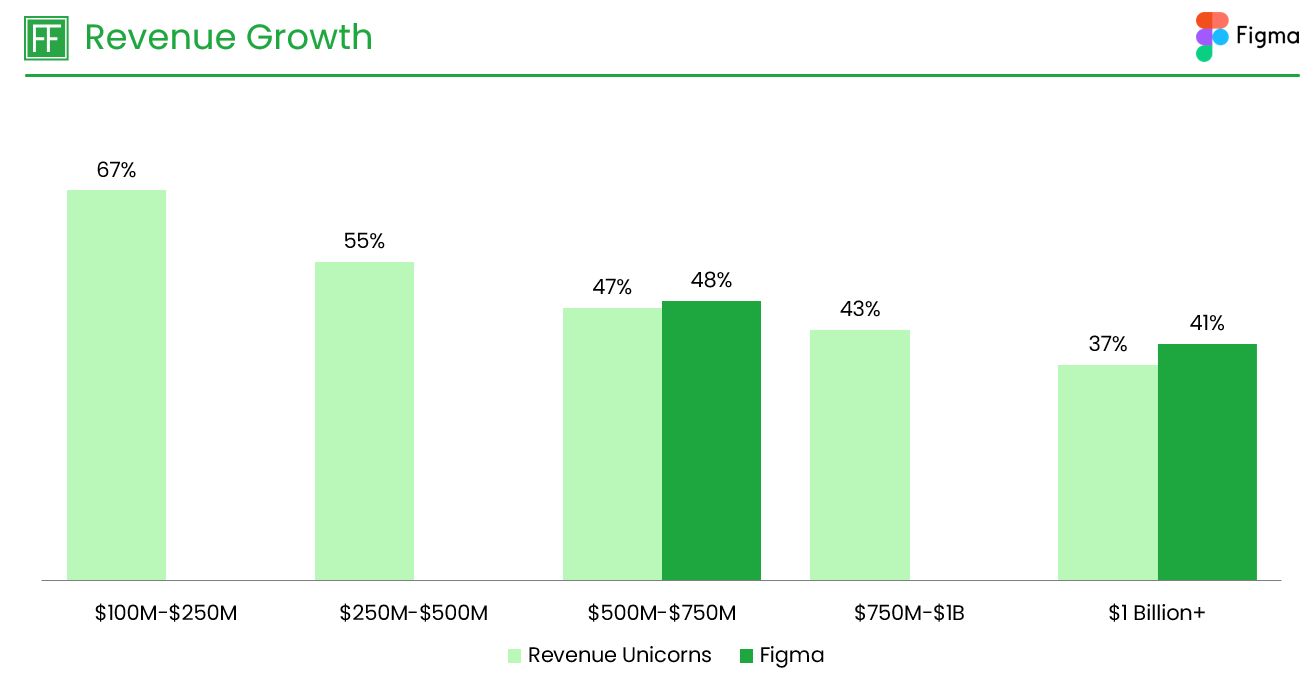
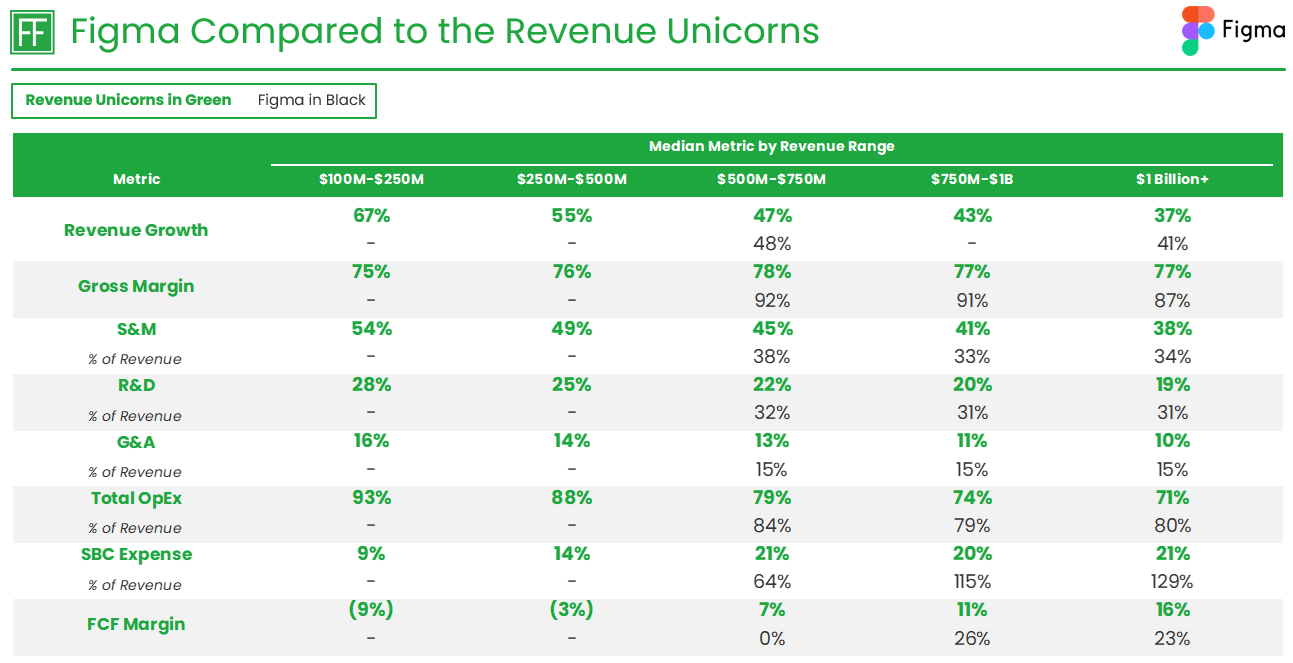
Figma exceeded the Revenue Unicorn median growth rate on their journey to $1 Billion in annual revenue. Notably, Figma does not have a growth rate displayed between $750 Million and $1 Billion in revenue due to a lack of publicly available data.
Gross Margin
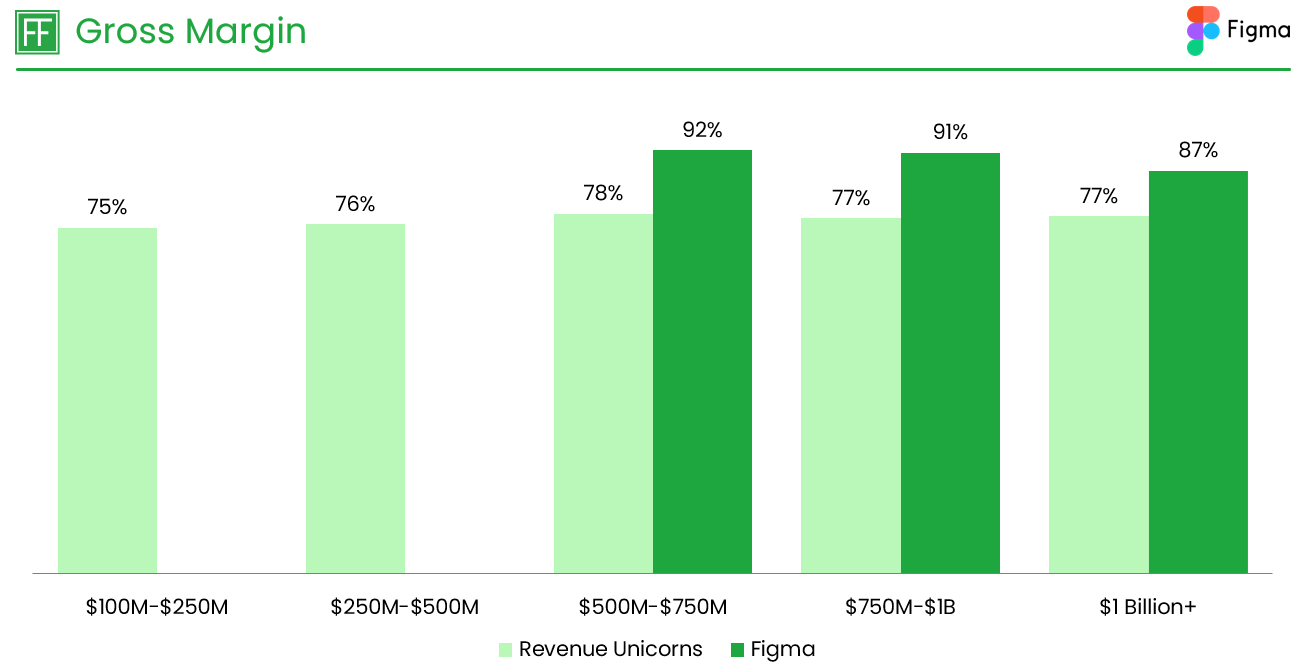
Figma’s gross margin has been greater than the Revenue Unicorn median across their entire lifecycle. Monday.com had similar gross margins on the journey from $100 Million to $1 Billion+ in revenue.
Sales & Marketing
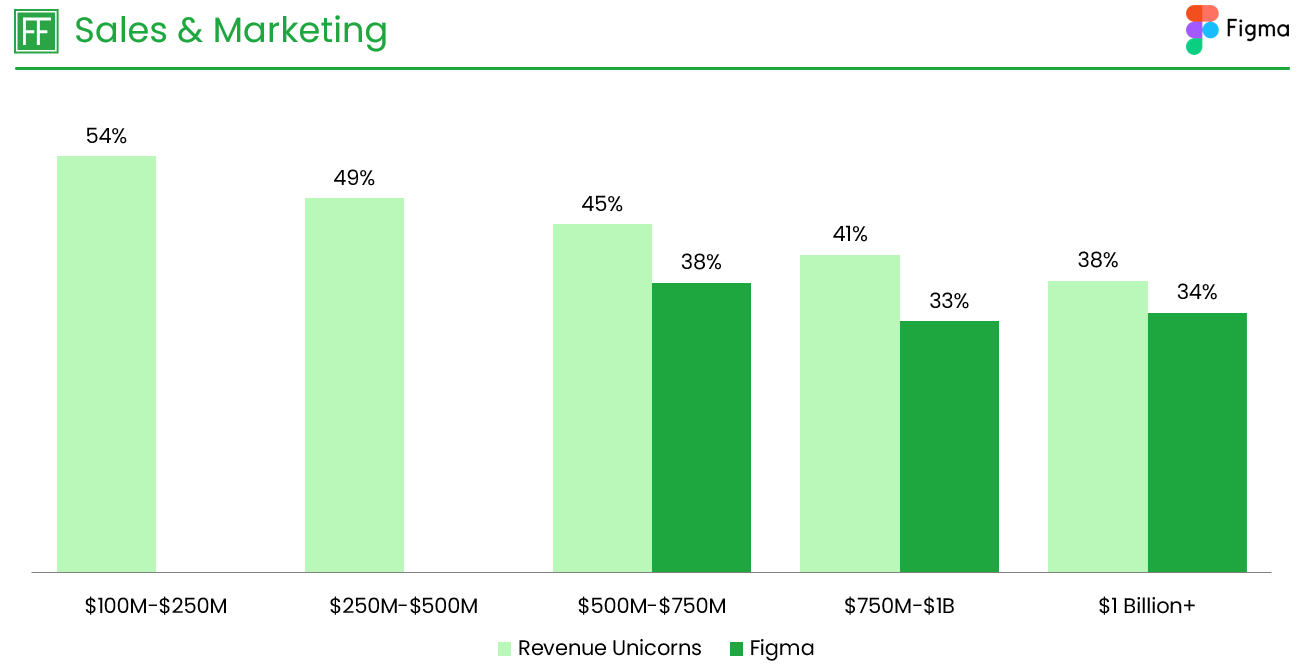
Figma invested less than the Revenue Unicorn median in sales and marketing as a percentage of revenue during its path to $1 Billion in annual revenue. Atlassian and Datadog had a similar sales and marketing expense as a percentage of revenue trend on their respective paths to $1 Billion in annual revenue.
Research & Development
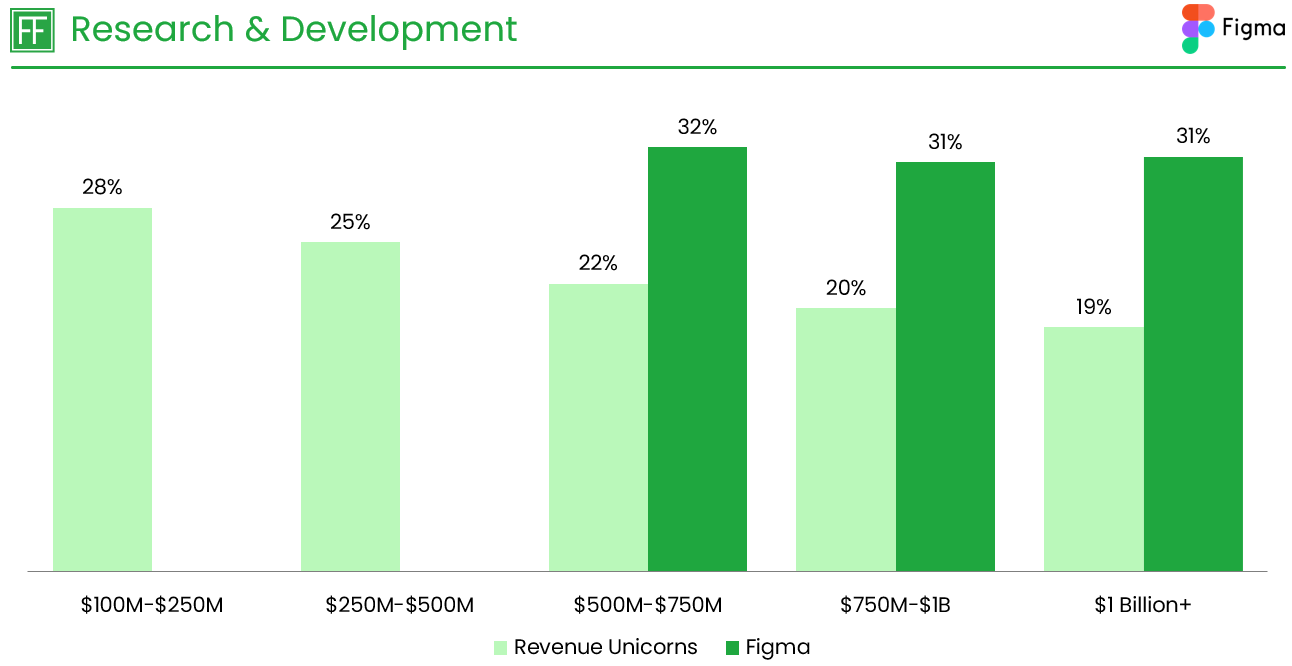
Figma invested more in research and development than the median Revenue Unicorn throughout their journey to $1 Billion in annual revenue. Figma’s spend on research and development mirrored that of Rubrik and Workday.
General & Administrative
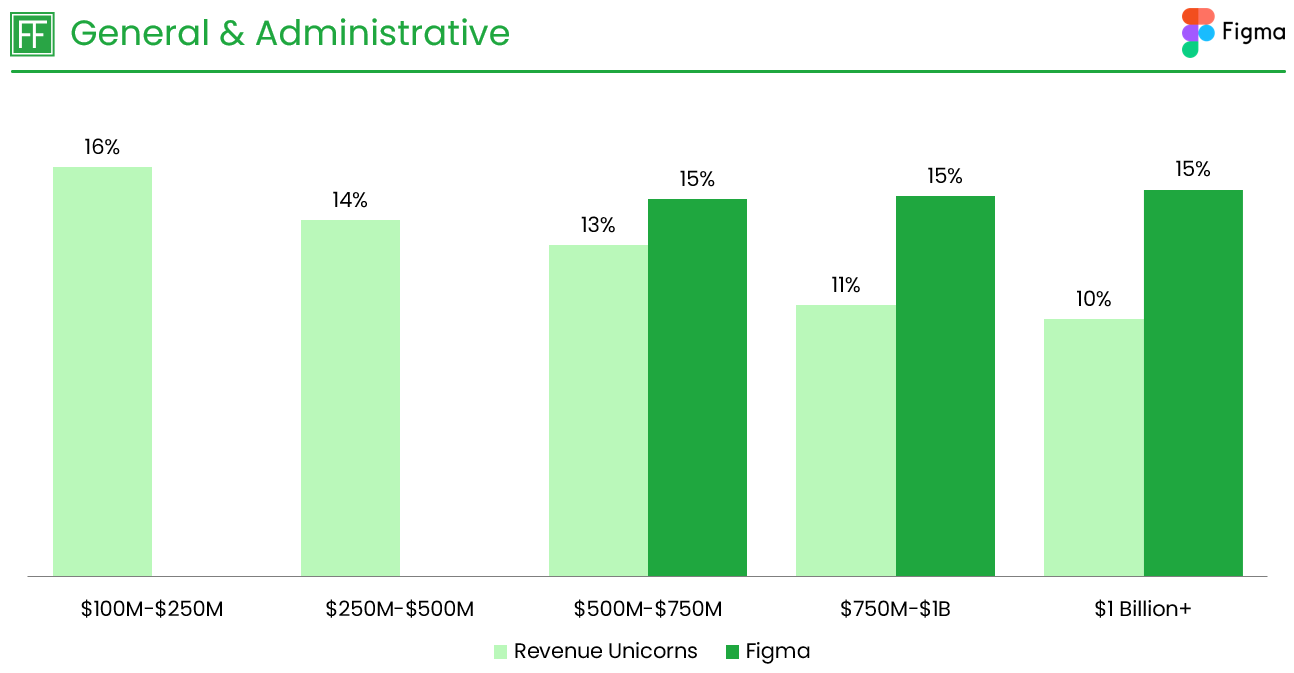
Figma’s general and administrative expense remained above the median Revenue Unicorn on their road to $1 Billion in annual revenue. Figma’s spend on general and administrative expense was similar to Procore and Okta.
Stock Based Compensation
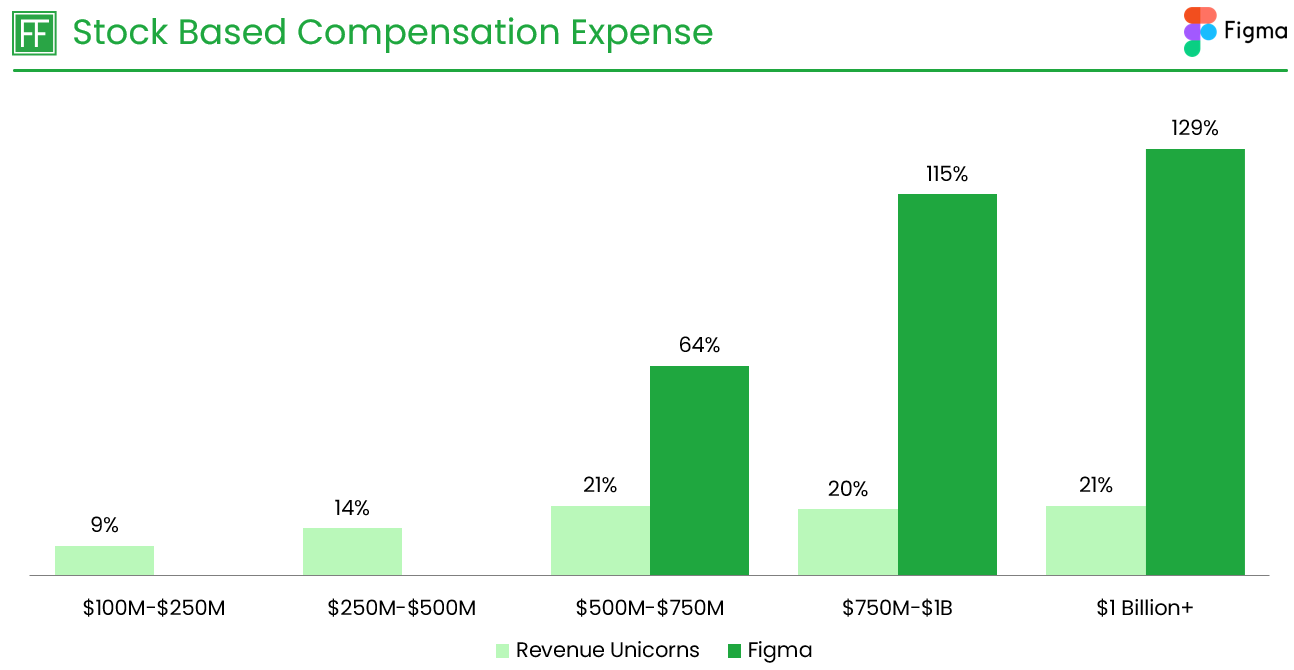
Figma had a higher SBC expense as a percentage of revenue from $500 Million to $1 Billion+ in revenue compared to the Revenue Unicorn median. Higher SBC in the $500 Million to $750 Million revenue range was due to RSU vesting, so RSU holders could participate in a tender offer if they elected to following the abandoned acquisition of Figma by Adobe. From $750 Million in revenue to $1 Billion+ in revenue Figma publicly listed, increasing SBC again as RSUs vested upon listing. When viewing SBC expense as a percentage of enterprise value, Figma is at 5.4%, which is higher than the Revenue Unicorn median of 1.8% in the $1 Billion+ revenue range.
Free Cash Flow
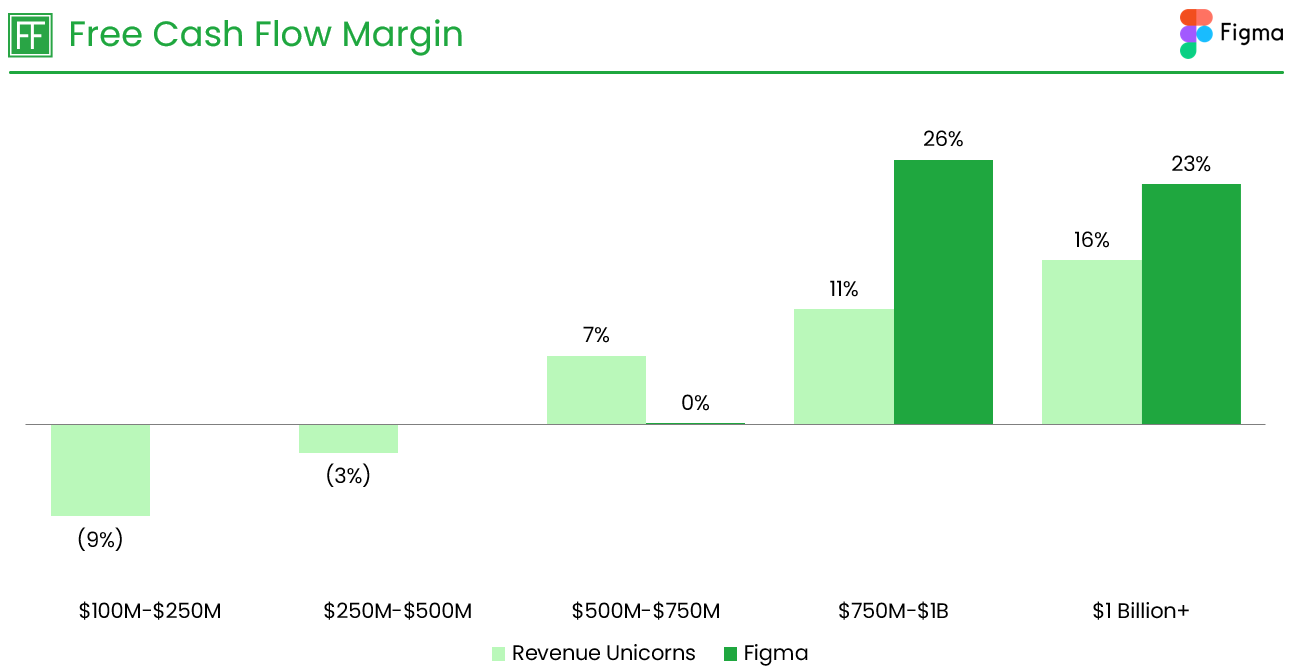
Figma’s free cash flow margin was 20%+ at scale. Notably, to normalize metrics, between $500 Million and $750 Million in revenue a $1 Billion deal termination fee from operating cash flow was removed. The deal termination fee was due to the abandoned acquisition of Figma by Adobe.
Time to Reach $1 Billion in Revenue
Figma reached $1 Billion in revenue after 13.00 years. This is faster than the median time of 13.38 years it took other Revenue Unicorns to reach the $1 Billion mark. Other Revenue Unicorns that took a similar amount of time to achieve the $1 Billion revenue threshold include Cloudflare (13.25 years) and Klaviyo (12.25 years).
Other Revenue Unicorns founded around the same time as Figma (2012 founding) include Monday.com (2012), and Rubrik (2013), which respectively took 12.25 years and 11.50 years to achieve $1 Billion in revenue.
The Journey to $1 Billion in Revenue
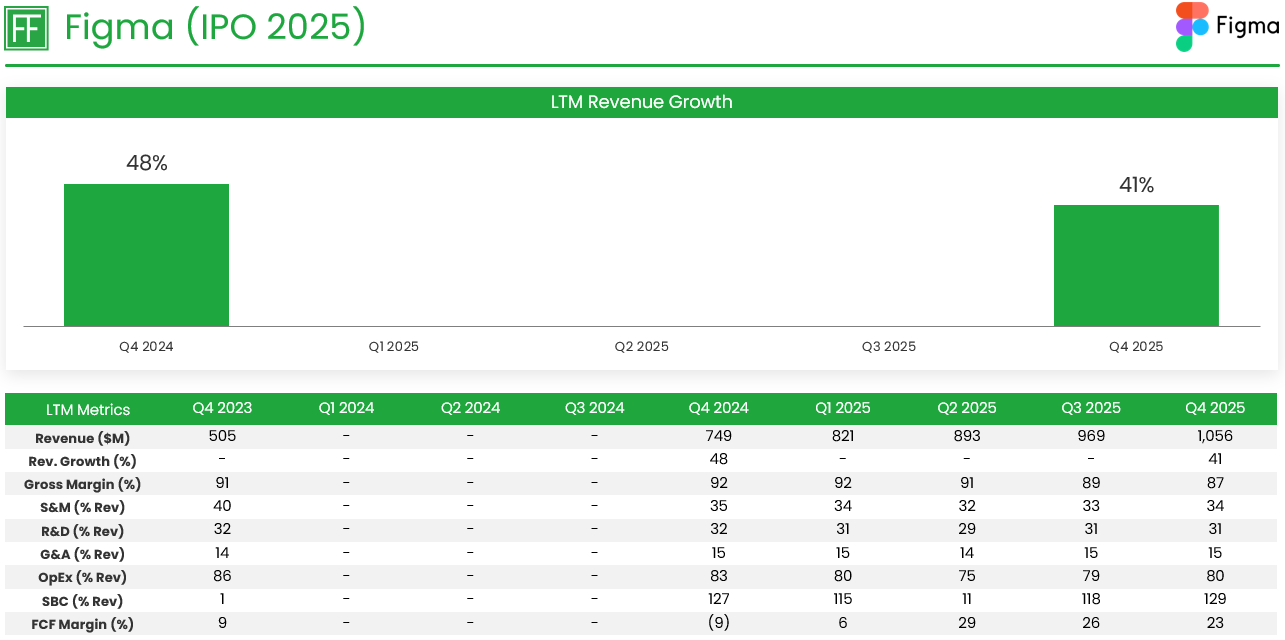
For those of you that love data as much as we do, below is the full data set used for this analysis.
Again, congratulations to the Figma team! Stay tuned for the next Revenue Unicorn update.
Note: The complete list of Revenue Unicorns used in the comparison can be found in the presentation here.
About Figma
Figma was founded in 2012 by Dylan Field and Evan Wallace. As per the Company’s materials, Figma is where teams come together to turn ideas into the world’s best digital products and experiences.
The Company reported $304 Million in fourth quarter revenue for the period ended December 31, 2025. Combined with results from the preceding quarters, this recent performance boosts Figma across the $1 Billion in annual revenue threshold as measured on a last twelve month basis to become the latest software Revenue Unicorn.
About The Revenue Unicorn Playbook
The Revenue Unicorn Playbook is an analytical guide that explores the growth of public software companies from $100 Million to $1 Billion in revenue. The goal of the Playbook is to offer founders and company leaders a framework to examine their growth and investments as they scale.
You can find the original Revenue Unicorn article here and presentation here.


.svg)
.svg)